

Difference Between Life Insurance and General Insurance: A Complete Guide
Insurance plays a critical role in financial planning by protecting individuals and families from unexpected risks and financial losses. However, many people often get confused between life insurance and general insurance, assuming they serve the same purpose. While both are essential components of risk management, they differ significantly in terms of coverage, objectives, duration, and benefits.
Understanding the difference between life insurance and general insurance is important for making informed financial decisions. Choosing the right type of insurance ensures that you are adequately protected against both life-related uncertainties and day-to-day risks. This blog explains the key differences in a simple, detailed manner to help you understand how each type of insurance works and why both are important.
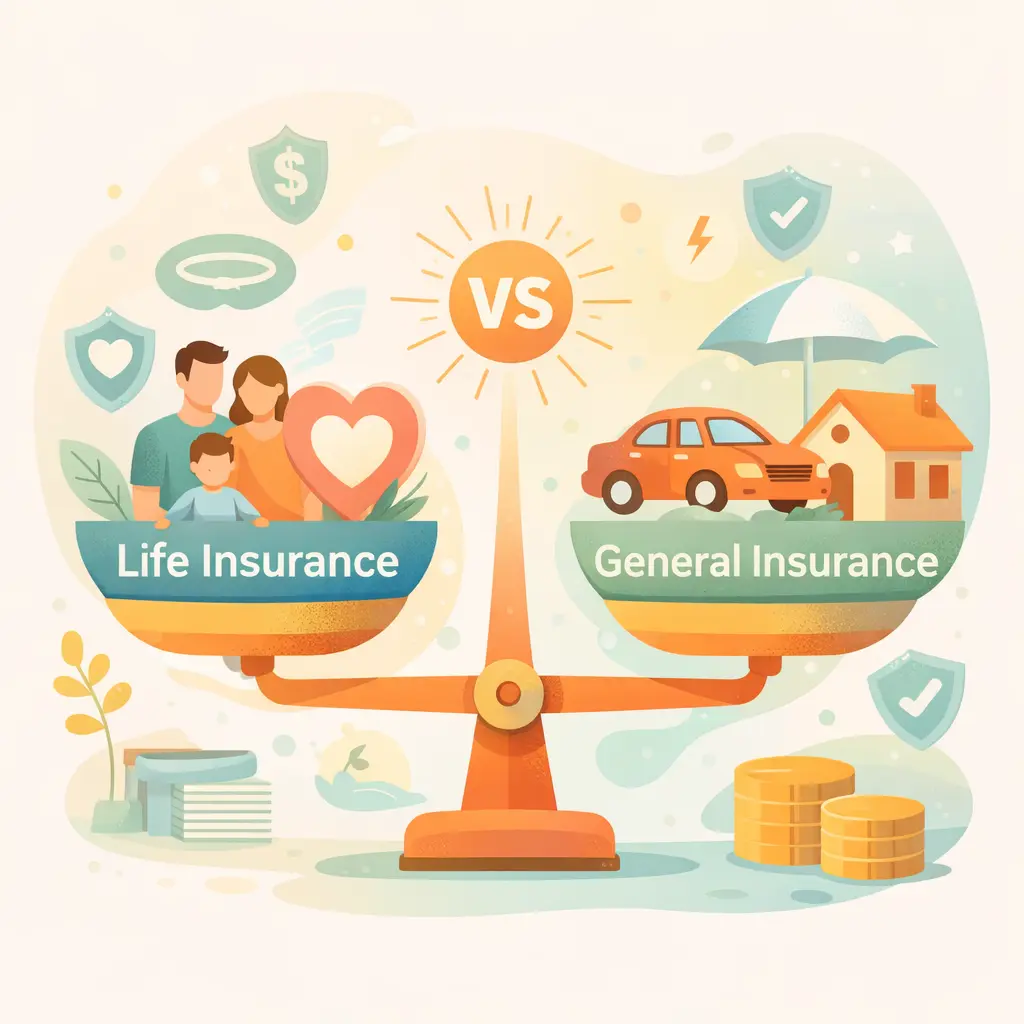
What Is Insurance?
Insurance is a financial arrangement in which an individual pays a fixed amount, known as a premium, to an insurance company in exchange for protection against specific risks. In the event of a covered loss, the insurer provides financial compensation as per the policy terms.
Broadly, insurance can be classified into two major categories:
-
Life Insurance
-
General Insurance
Each type addresses different kinds of risks and serves different financial goals.
What Is Life Insurance?
Life insurance is a contract that provides financial protection to the policyholder’s family or nominees in the event of the policyholder’s death. In some cases, it also offers maturity benefits if the policyholder survives the policy term.
The primary objective of life insurance is to provide financial security to dependents and ensure long-term financial stability. It is often used as a tool for income replacement, wealth creation, and financial planning.
Key Features of Life Insurance:
- Covers the risk of death
- Long-term policy duration
- Offers death and/or maturity benefits
- Helps in financial planning and savings
- Provides support to family members after the policyholder’s demise
Types of Life Insurance Policies
Life insurance policies come in various forms to suit different needs:
- Term Life Insurance: Provides pure life cover for a specific period. If the policyholder passes away during the term, the nominee receives the sum assured.
- Endowment Plans: Offer both insurance and savings. A payout is made either on death or at the end of the policy term.
- Whole Life Insurance: Provides coverage for the entire lifetime of the policyholder, usually up to a specified age.
- Unit Linked Insurance Plans (ULIPs): Combine life insurance with investment options, allowing policyholders to invest in equity or debt funds.
What Is General Insurance?
General insurance covers non-life-related risks such as health issues, accidents, property damage, travel-related losses, and vehicle damage. It provides financial compensation for specific losses incurred due to unforeseen events.
The main purpose of general insurance is risk coverage rather than savings or investment. These policies typically have a short-term duration, usually one year, and need to be renewed regularly.
Key Features of General Insurance
- Covers non-life risks
- Short-term coverage
- No maturity benefits
- Focuses on indemnity (compensation for loss)
- Protects assets, health, and liabilities
Types of General Insurance
General insurance includes several categories, each addressing different risks:
- Health Insurance: Covers medical expenses arising from illness, hospitalization, and treatments.
- Motor Insurance: Provides coverage for vehicle damage, theft, and third-party liabilities.
- Home Insurance: Protects residential property and belongings against risks such as fire, theft, and natural disasters.
- Travel Insurance: Covers travel-related risks including trip cancellations, medical emergencies, and baggage loss.
- Commercial Insurance: Covers business-related risks such as property damage, liability, and employee-related risks.
Difference Between Life Insurance and General Insurance
Understanding the difference between life insurance and general insurance becomes easier when comparing them across key parameters.
- Nature of Risk Covered: Life insurance covers the risk of death or survival beyond a specific period. General insurance covers risks related to health, property, vehicles, travel, and accidents.
- Policy Duration: Life insurance policies are long-term and may last for decades. General insurance policies are usually short-term, typically one year, and require regular renewal.
- Purpose: Life insurance serves as a financial safety net for dependents and also supports long-term financial goals. General insurance focuses on providing immediate financial relief in case of loss or damage.
- Payout Structure: Life insurance pays a fixed sum assured either on death or maturity. General insurance pays compensation based on the actual loss incurred, subject to policy limits.
- Savings and Investment Component: Life insurance often includes a savings or investment element. General insurance does not offer any savings or investment benefits.
- Premium Structure: Life insurance premiums are generally lower when purchased at a young age and remain stable over time. General insurance premiums depend on risk factors and may change upon renewal.
Claim Settlement Process
In life insurance, claims are straightforward and are paid upon death or maturity, provided policy conditions are met. The payout amount is predetermined and not linked to actual expenses.
In general insurance, claims are indemnity-based. The insurer assesses the loss and reimburses expenses up to the policy limit. Proper documentation and verification are required before claim settlement.
Tax Benefits
Life insurance policies often offer tax benefits on premiums paid and payouts received, subject to prevailing tax laws. This makes life insurance an important tax-saving instrument.
General insurance also offers tax benefits, particularly on health insurance premiums, but payouts are usually not taxable as they are meant to reimburse expenses.
Why You Need Both Life Insurance and General Insurance
Life insurance and general insurance serve different but complementary purposes. Life insurance ensures that your family remains financially secure in your absence. General insurance protects you from financial shocks arising from medical emergencies, accidents, or damage to assets.
Relying on only one type of insurance can leave gaps in your financial protection. A comprehensive financial plan includes both life and general insurance to address long-term and short-term risks effectively.
Final Thoughts
Understanding the difference between life insurance and general insurance is essential for building a strong financial foundation. While life insurance focuses on protecting loved ones and securing the future, general insurance safeguards against everyday risks and unexpected losses.
Both types of insurance play a vital role in financial planning. Together, they provide comprehensive protection, financial stability, and peace of mind. Making informed insurance choices today can help ensure a more secure and confident tomorrow.
WELFIN INSIGHT
“The right insurance amount is not the cheapest or the highest it’s the one that fits your life.”
