

Tips for purchasing health insurance for senior citizens
As we age, health becomes our greatest wealth. However, in 2026, the medical landscape has shifted: while medical inflation continues to rise at nearly 14% annually, new regulations and government schemes have made securing geriatric care more accessible than ever before.
Whether you are looking for health insurance for yourself or your parents, navigating the “fine print” is essential to ensure your retirement savings remain protected.
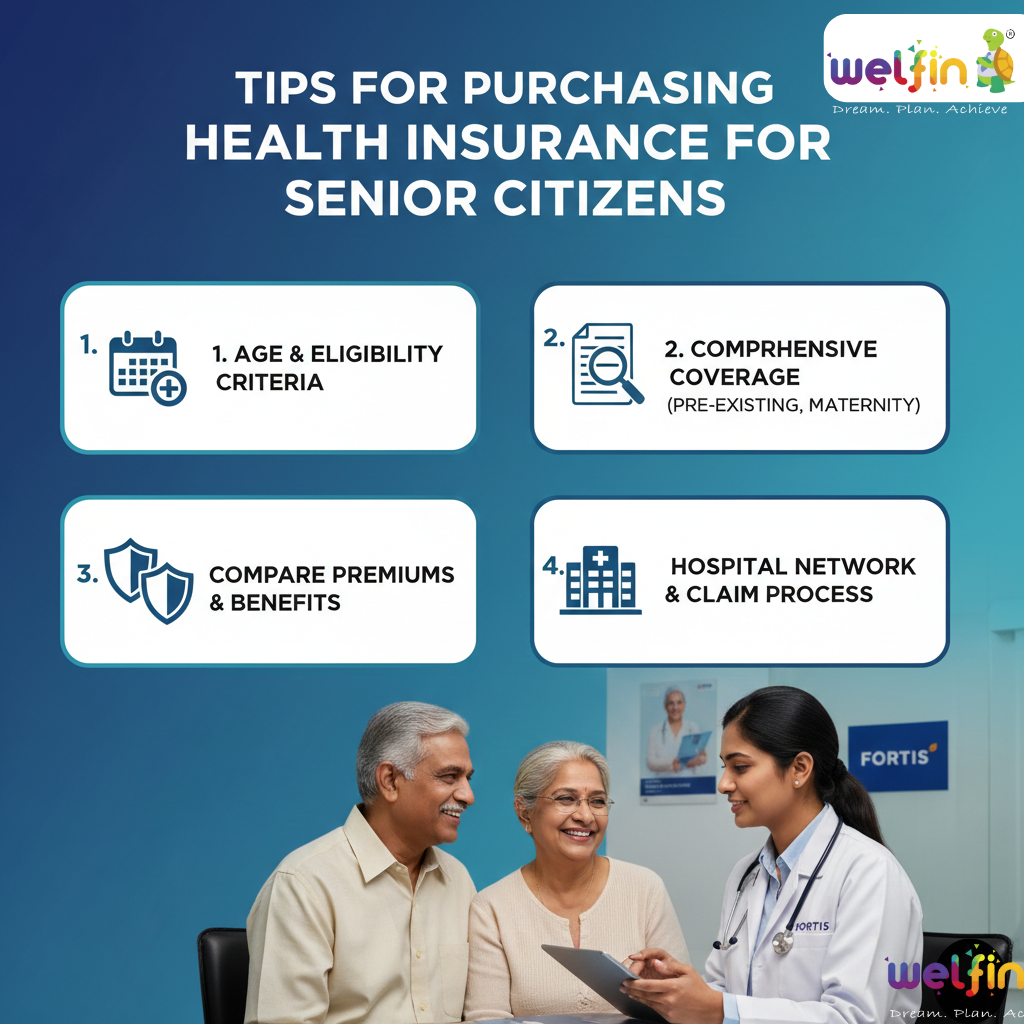
1. Evaluate Comprehensive "Modern" Senior Plans
In 2026, senior citizen plans have evolved beyond basic hospitalization. When comparing plans, prioritize these three non-negotiables:
- Minimal or Zero Co-payment: Historically, senior plans forced you to pay 20% of the bill out-of-pocket. Today, premium plans (like Niva Bupa ReAssure 2.0 or Star Red Carpet) offer options to waive this entirely, ensuring the insurer picks up the full tab.
- Shorter Waiting Periods: Traditional plans had a 4-year wait for pre-existing diseases (PED) like diabetes or hypertension. In 2026, many competitive plans have reduced this to 1–2 years, with some offering “PED Waivers” that activate coverage in just 30 days.
- OPD and Daycare Coverage: Many age-related treatments like dialysis, chemotherapy, and cataract surgeries no longer require a 24-hour stay. Ensure your policy covers these “Daycare” procedures and offers an OPD (Outpatient) benefit for regular consultations and diagnostics.
2. The "Ayushman Vay Vandana" Safety Net (70+ Seniors)
A landmark shift in 2026 is the expansion of the Pradhan Mantri Jan Arogya Yojana (PM-JAY). Under the Ayushman Vay Vandana initiative, all senior citizens aged 70 and above are now eligible for free coverage of up to ₹5 lakh per year, regardless of income.
- Key Advantage: Unlike private insurance, this has zero waiting periods; pre-existing conditions are covered from Day 1.
How to Apply: Seniors only need their Aadhaar card for a simple e-KYC process via the Ayushman App or a local CSC center to receive their Vay Vandana Card.
3. Individual Plans vs. Family Floaters
For seniors, the “Family Floater” model—where a couple shares one pool of money—is often a trap.
- The Recommendation: Opt for Individual Plans. In a floater, if one spouse exhausts the limit for a major surgery, the other is left unprotected for the rest of the year. Individual plans ensure dedicated “Sum Insured” for each person.
- Restoration Benefit: Look for plans with “Unlimited Restoration.” If you use your ₹10 lakh limit on one illness, the policy automatically refills it for the next one, providing a infinite safety net within the same year.
4. Strategic Use of "Super Top-Ups"
Buying a high-base cover (e.g., ₹25 lakh) for a senior can be prohibitively expensive. In 2026, the smart move is the Super Top-Up strategy.
- The Math: Buy a modest base policy of ₹5 lakh and add a ₹15 lakh Super Top-Up with a ₹5 lakh deductible. Your base policy covers the first 5 lakhs, and the Top-Up covers everything beyond that. This can reduce your premium costs by up to 30–40% while maintaining high total coverage.
Critical Checklist for 2026 Buyers
Feature | Importance | What to Look For |
Room Rent | Critical | Look for “No Room Rent Capping” to avoid pro-rata deductions. |
AI Claims | High | Choose insurers with 24-hour AI-powered cashless approvals. |
Annual Check-up | High | Essential for early detection of chronic conditions. |
Network | Critical | Ensure your preferred local multi-specialty hospital is on the “Cashless” list. |
In a Nutshell
Securing health insurance for seniors in 2026 requires a hybrid approach: utilizing the Ayushman Vay Vandana card for a solid foundation and a Private Super Top-Up for access to premium wards and specialized doctors. By disclosing medical history accurately and prioritizing shorter waiting periods, you ensure that medical bills never compromise your peace of mind.
WELFIN INSIGHT
“The right insurance amount is not the cheapest or the highest it’s the one that fits your life.”
