
Retirement Mistakes to Avoid
Retirement is often viewed as a time to relax and enjoy the rewards of decades of hard work. However, for many people, retirement brings financial stress rather than comfort, not because they did not earn enough, but because they made avoidable planning mistakes. Understanding retirement mistakes to avoid is crucial for building a secure and independent post-retirement life.
Retirement planning is not just about saving money. It involves managing expenses, preparing for healthcare costs, adjusting investments over time, and making realistic assumptions about the future. Small mistakes made today can have a significant impact on financial stability later.
This blog explores the most common retirement mistakes and explains how avoiding them can help ensure a more confident and stress-free retirement.
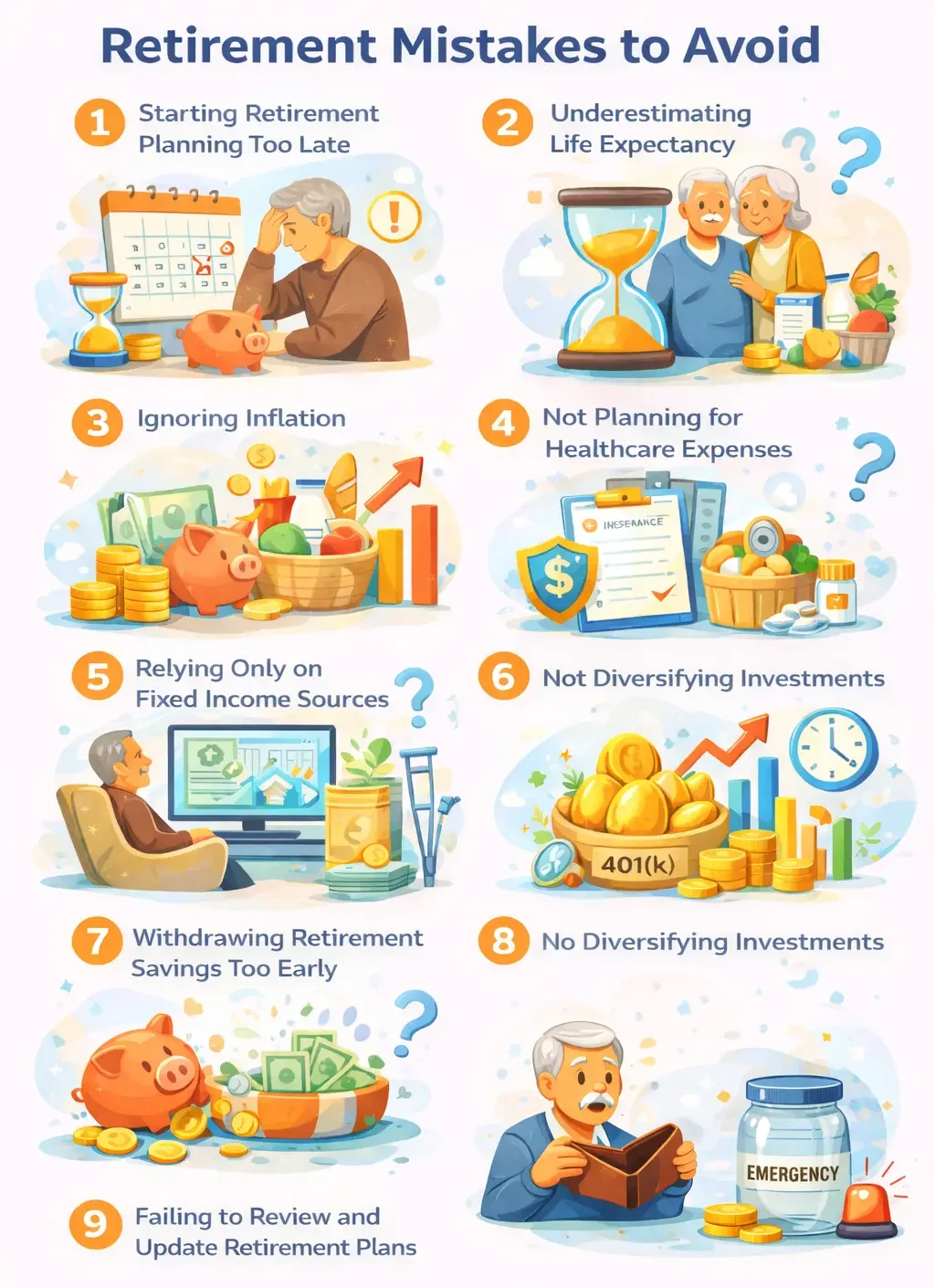
1. Starting Retirement Planning Too Late
One of the biggest retirement mistakes to avoid is delaying the planning process. Many people believe they have plenty of time and postpone saving for retirement until their 40s or 50s.
Starting late means:
- Less time for compounding to work
- Higher monthly savings required
- Increased financial pressure closer to retirement
2. Underestimating Life Expectancy
People often plan their retirement finances assuming they will live only a few years after retirement. However, with improved healthcare and lifestyle changes, many individuals live well into their 80s or even 90s.
Underestimating life expectancy can result in:
- Running out of savings
- Reduced quality of life in later years
- Dependence on family members
3. Ignoring Inflation
Inflation is a silent threat that can significantly reduce the purchasing power of your money over time. One of the most common retirement mistakes to avoid is planning expenses based on today’s costs without adjusting for future inflation.
Even moderate inflation can double living expenses over a long retirement period. Ignoring this factor can lead to insufficient savings and unexpected financial stress.
4. Not Planning for Healthcare Expenses
Healthcare costs tend to increase with age, making medical expenses one of the biggest financial risks during retirement. Many people underestimate how much they will need for medical care and long-term treatment.
Failing to plan for healthcare can result in:
- Using retirement savings for medical emergencies
- Compromising on quality treatment
- Financial dependence during old age
5. Relying Only on Fixed Income Sources
While fixed income investments offer stability, relying entirely on them can be risky. Fixed returns may not keep up with inflation, especially during long retirement periods.
A common retirement mistake is avoiding growth-oriented investments altogether. A balanced approach that includes some growth assets can help maintain purchasing power while managing risk.
6. Not Diversifying Investments
Putting all retirement savings into a single investment or asset class increases risk. Lack of diversification makes your retirement corpus vulnerable to market fluctuations or economic changes.
Diversifying investments across different asset classes helps:
- Reduce overall risk
- Provide stable returns
- Protect against unexpected losses
7. Withdrawing Retirement Savings Too Early
Early withdrawals from retirement savings can significantly impact long-term financial security. Withdrawing funds before retirement not only reduces the corpus but also limits the power of compounding.
Using retirement funds for short-term needs is a retirement mistake that can be difficult to recover from later.
8. Overestimating Post-Retirement Income
Many people assume they will continue earning through part-time work, business income, or rentals after retirement. While this may happen for some, relying too heavily on uncertain income sources can be risky.
Retirement plans should be built on realistic assumptions rather than optimistic expectations.
9. Failing to Review and Update Retirement Plans
Life changes over time, and retirement plans must adapt accordingly. One of the most overlooked retirement mistakes to avoid is failing to review plans regularly.
Major life events such as:
- Marriage or family changes
- Career shifts
- Health issues
- Economic changes
10. Not Having an Emergency Fund
Many retirees face unexpected expenses such as medical emergencies, home repairs, or family responsibilities. Without an emergency fund, these expenses may force retirees to dip into long-term savings.
An emergency fund acts as a financial buffer and helps protect retirement investments from premature withdrawals.
Final Thoughts: Avoid Mistakes, Secure Your Retirement
Retirement planning is a long-term process that requires foresight, discipline, and regular review. Understanding retirement mistakes to avoid can help individuals make smarter decisions and protect their financial future.
By starting early, planning realistically, diversifying investments, and preparing for healthcare and inflation, retirees can enjoy financial stability and peace of mind. Avoiding common mistakes today can make the difference between a stressful retirement and a comfortable, independent one.
WELFIN INSIGHT
“The right insurance amount is not the cheapest or the highest it’s the one that fits your life.”
