

CHILD EDUCATION PLANNING CHECKLIST FOR INDIAN PARENTS

Child Education Planning: Securing Your Child’s Future Every parent wishes to provide their child with the best possible education. With the rising costs of education today, careful planning is essential to ensure that your child’s dreams are not hindered by financial constraints. A well-thought-out Child Education Plan helps cover future education expenses and provides financial security. Child Education Planning Checklist Here’s a four-step guide to help parents plan effectively: 1. Make a Roadmap for Yourself Many parents overlook the need to plan for their child’s education. Start by defining your objectives: Determine your child’s future educational needs. Estimate the total cost and timeline for achieving your goal. Develop a strategy that outlines how and when to invest to meet the target. A clear roadmap ensures you know exactly where to go and how to reach your goal. 2. Factor in Inflation Education costs rise every year, and ignoring inflation can lead to insufficient funds. Calculate the future value of your child’s education rather than just current expenses. Ensure your investments will grow enough to meet these future costs. Avoid relying on loans later by planning early and factoring in inflation. 3. Choose the Right Investment Instrument Selecting the right financial tool is crucial for growing your savings efficiently: SIPs in equity mutual funds: Suitable for long-term goals (5+ years), with higher risk but potentially higher returns. Fixed income instruments (FDs, PPF, bonds): Offer stable, linear growth with lower risk. Child education plans: Combine insurance coverage with systematic savings for your child’s education. Choose an option that aligns with your risk tolerance, timeline, and goal amount. 4. Protect Your Goal It’s important to appoint someone trustworthy to manage the funds if you are unable to do so. The appointee should invest and disburse money according to the plan’s objective. Clearly define your intentions in your will or investment documents to safeguard your child’s future. Conclusion A Child Education Plan ensures your child can pursue higher education without financial obstacles. Planning early allows you to invest systematically and efficiently. Consider long-term investment options like SIPs for better growth potential. Use online tools and premium calculators to compare plans and select one that meets your goals and budget. WELFIN INSIGHT “The right insurance amount is not the cheapest or the highest it’s the one that fits your life.” January 16, 2026 FIVE STEPS TO BUILD A SOLID CHILD EDUCATION PLAN Read More January 16, 2026 CHILD EDUCATION PLANNING CHECKLIST FOR INDIAN PARENTS Read More January 16, 2026 IMPORTANCE OF SAVINGS Read More Confused about money decisions? Get clarity on investments, insurance & goals in one plan. Check Now Not sure if your insurance is enough? 👉 Get a Free Insurance Adequacy Check Get In Touch
HEALTH INSURANCE BUYING TIPS

HEALTH INSURANCE BUYING TIPS In today’s fast-paced world, health problems are increasingly common, even among younger people. Rising medical costs make health insurance one of the most crucial types of insurance to have. Despite this, health insurance is often underestimated in India because it only pays out when illness occurs. Health insurance ensures that you are financially prepared for medical emergencies. Individual plans, family floaters, and senior citizen health insurance are widely available in India. Before purchasing a plan, you should carefully assess your needs and consider some practical health insurance buying tips. Why Health Insurance is Important in India High prevalence of lifestyle-related illnessesStressful lifestyles have contributed to the rise of health issues like heart disease, diabetes, respiratory ailments, and infectious diseases. Health insurance ensures access to timely medical care without financial strain. Rising medical costsTreatment costs are increasing due to advanced technology and expensive procedures. Relying solely on personal savings or employer-provided insurance is risky, as coverage often ends when you leave the company. Low insurance penetration Only about 15% of India’s population has health insurance coverage. Many households fund hospitalization through loans or asset sales. About 3.2% of Indians fall below the poverty line due to medical expenses. Health insurance protects families from such financial hardship and ensures access to quality healthcare. Health Insurance Buying Tips Here are seven essential tips to help you choose the best health insurance plan: 1. Evaluate Your Coverage Needs Select a plan that covers a wide range of medical expenses, including: Pre- and post-hospitalization costs Childcare expenses Transportation for medical emergencies Family-specific conditions based on medical history Compare plans carefully to ensure that all family members are adequately covered. 2. Balance Coverage and Cost While comprehensive coverage is important, make sure the plan fits your budget. Start with a basic plan and adjust coverage as your family size, income, and needs evolve. 3. Prefer Family Floater Plans for Families Individual plans are suitable for single people, but family floater plans offer better benefits and cost efficiency for multiple members under a single policy. 4. Opt for Lifetime Renewability Choose plans that are renewable for life, as healthcare needs increase with age. Avoid policies with limited renewal periods. 5. Compare Plans Online Use online tools to compare policies, coverage, and premiums. Obtain multiple quotes to ensure you select the best plan for your needs and budget. 6. Check the Hospital Network Ensure your preferred hospitals and doctors are part of the insurance company’s network. A wide network allows for cashless claims settlement and faster access to medical care. 7. Look for High Claim Settlement Ratios The claim settlement ratio (CSR) indicates the percentage of claims successfully paid by the insurer. Choose a company with a high CSR to ensure reliable support during medical emergencies. Conclusion Health insurance is essential to protect yourself and your family from the financial burden of medical expenses. By following these tips, assessing your needs, comparing plans, checking renewability, and reviewing networks, you can make the most of your investment and ensure comprehensive healthcare coverage. WELFIN INSIGHT “The right insurance amount is not the cheapest or the highest it’s the one that fits your life.” January 16, 2026 IMPORTANCE OF SAVINGS Read More January 16, 2026 HEALTH INSURANCE BUYING TIPS Read More January 16, 2026 HOW CAN YOU INCREASE YOUR HEALTH INSURANCE COVERAGE Read More Confused about money decisions? Get clarity on investments, insurance & goals in one plan. Check Now Not sure if your insurance is enough? 👉 Get a Free Insurance Adequacy Check Get In Touch
Term insurance buying tips

Term insurance buying tips Term insurance is one of the most cost-effective ways to secure a high level of life insurance at a relatively low cost. Unlike whole life plans, term insurance focuses purely on protection, without any savings or investment component. By following these term insurance buying tips, you can avoid inadequate coverage and ensure your family’s financial security. 1. Understand the Purpose of Term Insurance Term insurance is primarily intended to replace lost income if the primary breadwinner passes away or becomes unable to work. These needs are usually temporary, ending once dependents become financially independent. Consider purchasing insurance until you no longer have dependents—for example, until your children are financially self-sufficient. Term insurance is usually cheaper than whole life insurance for the same coverage, making it ideal for temporary high-priority needs. 2. Choose the Right Duration of Coverage Ensure the policy term is sufficient to cover: The period your dependents need financial support Loan or mortgage repayments Examples: A woman in her twenties may choose coverage until retirement or for at least 30 years. A couple may purchase term insurance to cover a mortgage, which decreases as the loan is repaid. Avoid paying premiums for coverage you no longer need. 3. Check for Renewability If your future coverage needs are uncertain, choose a renewable term plan, which allows you to extend the policy without further medical underwriting. Note: Premiums increase with age at each renewal. For longer protection, a fixed-term plan with constant premiums may be more cost-effective. 4. Consider Staggered or Diminishing Term Plans Staggered term plans: Provide higher coverage early on when responsibilities are greater, and lower coverage later when obligations decrease. Diminishing term plans: Coverage decreases over time, ideal for loans or mortgages that reduce with each payment. 5. Look for Convertibility Some term plans allow conversion to a permanent life insurance plan after a specified period. This feature can be valuable if your long-term insurance needs change. 6. Pay Premiums on Time Term insurance typically has no cash value, so missing premiums can cause the policy to lapse. Some plans offer a non-forfeiture provision, but it’s best to ensure premiums are paid on time. Reinstating a lapsed policy may require proof of good health, which can be expensive or difficult later. 7. Understand the Insured Event Know exactly what the policy covers: Death Terminal illness Total and permanent disability Early-stage or advanced critical illness (if included) Ensure that the coverage matches your family’s needs. 8. Choose Riders Wisely Riders can enhance your term plan, but avoid unnecessary add-ons: Waiver of premium rider: Keeps your policy active if you develop a severe illness or disability. Critical illness rider: Pays a lump sum if diagnosed with covered critical illnesses. Only select riders that add meaningful protection. 9. Consider Group Term Insurance Group term insurance can be more affordable: Offered by employers or unions (e.g., Singapore Armed Forces, NTUC Union) Employer may cover the premium, making it cost-effective Verify your coverage amount, as it varies by role and organization 10. Compare Premiums and Features Premiums vary based on: Age Gender Sum assured Policy term Tips for better deals: Compare multiple insurers to find the best coverage and rates Check for discounts on higher coverage amounts (e.g., $1 million) Evaluate the features offered alongside premiums Conclusion A well-chosen term insurance policy provides financial protection for your family at an affordable cost. Focus on coverage amount, term duration, renewability, riders, and premiums. By following these tips, you can ensure your loved ones are financially secure even in your absence. WELFIN INSIGHT “The right insurance amount is not the cheapest or the highest it’s the one that fits your life.” January 16, 2026 HOW CAN YOU INCREASE YOUR HEALTH INSURANCE COVERAGE? – Copy Read More January 16, 2026 Term insurance buying tips Read More January 16, 2026 Why financial planning is important for everyone? Read More Confused about money decisions? Get clarity on investments, insurance & goals in one plan. Check Now Not sure if your insurance is enough? 👉 Get a Free Insurance Adequacy Check Get In Touch
Why financial planning is important for everyone?

Why financial planning is important for everyone? When we think of financial planning, businesses often come to mind. However, in today’s rapidly changing environment, individuals must also plan carefully for their financial future. The importance of financial planning has never been greater. Financial planning plays a vital role in an individual’s overall well-being. This article highlights the key aspects you should consider while creating a financial plan so you can lead a secure and stress-free life. Let us explore the meaning, components, objectives, and importance of financial planning. What Is Financial Planning? The importance of financial planning in everyday life cannot be overstated. Financial planning helps identify spending priorities and allocate resources effectively. It provides a clear roadmap for achieving both short-term and long-term financial goals. For example, purchasing a home often requires a substantial down payment, which many people fund through loans without fully assessing their financial position. Such decisions, made without proper planning, can lead to financial strain. With a well-structured financial plan, you can organize your finances in advance and determine whether you can realistically afford major purchases. Financial planning enables you to make informed decisions, improve your quality of life, and enjoy greater peace of mind. In simple terms, financial planning allows you to track your income and expenses effectively. Having control over how and where your money is spent is essential for long-term financial success. Objectives of Financial Planning Financial planning is carried out to achieve specific goals. Some of the key objectives include: Ensuring financial availability: A sound financial plan ensures that funds are available when needed, whether for routine expenses or unexpected emergencies. Avoiding unnecessary borrowing: Without planning, individuals often rely on loans when short on cash. A financial plan helps you decide whether borrowing is truly necessary. Encouraging investments: A structured budget reveals how much you can invest and where, helping you grow your wealth efficiently. Focusing on long-term goals: Financial planning supports long-term wealth accumulation and helps secure your future financial needs. Components of a Financial Plan A comprehensive financial plan consists of the following key components: 1. Cash Flow Analysis Understanding cash flow is the foundation of financial planning. If expenses exceed income, achieving financial goals becomes difficult. Evaluating income, expenses, assets, and liabilities helps establish financial balance. 2. Investment Strategy An effective financial plan includes an investment strategy based on your financial capacity and risk tolerance. Planning investments carefully can enhance cash flow and support long-term wealth creation. 3. Retirement Planning Retirement planning is a critical element of financial planning. It helps determine when you can retire, the lifestyle you wish to maintain, and the income required to support it. 4. Tax Planning Tax planning ensures that your investments are structured efficiently to maximize returns and minimize tax liabilities. Understanding applicable tax laws and government benefits is essential for protecting your income. Importance of Financial Planning Financial planning offers numerous benefits that contribute to financial security and personal well-being: Protects Your Family One of the primary goals of personal financial planning is to secure your family’s future. Life is unpredictable, and a solid financial plan can protect your loved ones from unexpected hardships. Improves Cash Flow Management Financial planning helps track spending habits and encourages budgeting. By controlling unnecessary expenses, you can improve your cash flow and save more effectively. Prepares You for Emergencies A financial plan highlights the importance of building an emergency fund. Ideally, this fund should cover at least six months of essential expenses, providing stability during job loss or unexpected situations. Enhances Your Standard of Living Without proper planning, people often sacrifice their lifestyle to manage expenses. A well-designed financial plan allows you to meet financial obligations while still enjoying life without constant money-related stress. Helps You Achieve Your Goals A financial plan acts as a roadmap for achieving personal goals such as buying a home, traveling, or purchasing a luxury vehicle. It ensures you remain on track and make steady progress toward your ambitions. Conclusion Financial planning is essential at every stage of life. It provides clarity, discipline, and direction, helping you manage your finances effectively and achieve long-term security. By creating and following a well-structured financial plan, you can protect your future, meet your goals, and enjoy a peaceful and fulfilling life. WELFIN INSIGHT “The right insurance amount is not the cheapest or the highest it’s the one that fits your life.” January 16, 2026 Why financial planning is important for everyone? Read More January 16, 2026 what is general insurance and its types Read More January 16, 2026 What is marine Insurance & its types? Read More Confused about money decisions? Get clarity on investments, insurance & goals in one plan. Check Now Not sure if your insurance is enough? 👉 Get a Free Insurance Adequacy Check Get In Touch
what is general insurance and its types

What is general insurance and its types In India, insurance is broadly classified into two categories: life insurance and general insurance. Life insurance provides financial protection against the loss of life, while general insurance covers financial losses arising from damage to assets. General insurance and its types are designed to protect the economic value of assets and compensate for financial losses caused by specific unforeseen events. There are several types of general insurance plans available in India, each created to cover different kinds of risks. Let us explore the concept of general insurance and its various types in detail. What Is General Insurance? General insurance refers to the insurance of physical and financial assets. If a financial loss occurs due to an event covered under the policy, the insurer compensates the insured for that loss. These policies provide protection against risks such as accidents, illnesses, natural disasters, theft, and other unexpected events. Benefits of General Insurance General insurance policies offer several advantages, including: They provide financial compensation for losses, ensuring financial stability during unforeseen situations. They help protect your savings during emergencies, allowing you to use your funds for long-term financial goals. A wide variety of plans are available to suit different personal and professional needs. Types of General Insurance Plans in India There are many general insurance plans available in the market. Some of the most common and essential ones are outlined below: Health Insurance Health insurance plans cover medical expenses incurred due to illness or injury. With rising healthcare costs, these policies play a vital role by covering hospitalization, treatment, and medication expenses, thereby reducing financial stress. Motor Insurance Motor insurance is a type of general insurance that is legally mandatory in India. Every vehicle must be insured before it is driven on Indian roads. These policies provide coverage against accidents, damages, and third-party liabilities. Home Insurance Home insurance policies protect homeowners from financial losses caused by damage to their property or its contents. They offer coverage against natural and man-made disasters such as fire, floods, theft, and earthquakes. Coverage typically includes: Damage to the house structure, including construction, electrical systems, heating, and air conditioning Coverage for additional structures like garages, driveways, swimming pools, and backyards Protection against theft of household items such as furniture and electrical appliances Expenses for alternative accommodation if the house becomes uninhabitable due to damage Fire Insurance Fire insurance policies cover losses resulting from fire and related risks. These policies protect specified assets and properties, paying for repair or replacement costs if the insured items are damaged or destroyed due to fire or allied perils. Vehicle Insurance Vehicle insurance provides coverage if you or your vehicle is involved in an accident. Key benefits include: Hospitalization coverage for injuries Cashless repair facilities at network garages 24/7 customer support and grievance redressal Protection against natural disasters (floods, earthquakes, cyclones) and man-made events (theft, riots, strikes) Other Types of General Insurance Plans Apart from personal insurance plans, there are also commercial general insurance policies, which include: Marine Insurance Directors and Officers (D&O) Insurance Commercial General Liability Insurance Professional Indemnity Insurance Group Insurance Policies Cyber Risk Insurance Key Factors to Consider When Buying General Insurance Before purchasing general insurance and its types, keep the following points in mind: Choose a plan that suits your specific needs. Health and motor insurance are essential, while travel insurance is important when planning a trip. Ensure the coverage amount is sufficient to meet potential financial losses. Select a plan with affordable premiums that fit within your budget. Always compare multiple policies. Comparing plans helps you find comprehensive coverage at a competitive price. Conclusion General insurance offers numerous benefits and plays a crucial role in financial planning. While health, home, and motor insurance should always be maintained, travel insurance can be purchased before embarking on a journey. General insurance policies provide protection against a wide range of financial risks, ensuring peace of mind and financial security. By choosing the right plans, you can safeguard yourself and your assets against unexpected losses. WELFIN INSIGHT “The right insurance amount is not the cheapest or the highest it’s the one that fits your life.” January 16, 2026 what is general insurance and its types Read More January 16, 2026 What is marine Insurance & its types? Read More January 16, 2026 What are the types of fire insurance? Read More Confused about money decisions? Get clarity on investments, insurance & goals in one plan. Check Now Not sure if your insurance is enough? 👉 Get a Free Insurance Adequacy Check Get In Touch
What is marine Insurance & its types?

What Is Marine Insurance and Its Types? Marine insurance provides coverage for ships, cargo, terminals, depots, and all modes of transit through which goods are transported, acquired, or stored from their point of origin to their final destination. It protects ships, cargo vessels, terminals, and other transportation methods involved in moving goods between multiple locations and the final delivery point. By covering transportation-related risks, marine insurance safeguards shipping companies, exporters, importers, and logistics providers from potentially heavy financial losses. Although the term “marine” originated from sea transport, marine insurance today covers cargo movement by sea, air, rail, and road. One of the key advantages of marine insurance is its flexibility, transporters can choose policies tailored to their specific industry, cargo type, ship size, and routes covered. Before exploring marine insurance and its types, let us first understand its features and the procedure involved. Features of a Marine Insurance Policy A marine insurance policy covers ships, cargo, terminals, and any mode of transit through which goods are moved or stored between the place of origin and the final destination. Cargo insurance, a type of marine insurance, protects goods exposed to risks during coastal and offshore transport. Marine insurance can cover: Container terminals and ports Oil platforms and pipelines Ship hulls and machinery Maritime casualties and marine liabilities Shipping insurance is commonly used when goods are transported via courier or postal services. The Marine Insurance Act of 1963 governs marine insurance contracts and imposes strict compliance requirements. Marine insurance policies are legally binding agreements with clearly defined terms and conditions. Even minor deviations from policy conditions may lead to claim rejection. Insurers follow strict procedures when settling claims, and failure to adhere to policy requirements can result in loss of coverage. Therefore, it is essential to fully understand policy features and obligations. A marine insurance contract is valid only if an insurable interest exists. Any person whose goods are being transported by sea and may suffer a loss has an insurable interest. Once the insurer reviews the proposal and contractual terms, the policy is issued. Even if a formal policy document is not issued immediately, coverage may still arise from a valid contract. Types of Marine Insurance Marine insurance is broadly classified into the following types: Hull Insurance Hull insurance protects vessels against damage or accidents. It covers the ship’s structure, body, and equipment, along with certain onboard items. Machinery Insurance Machinery Breakdown Insurance covers unexpected physical loss or damage to machinery. This includes factory equipment, generators, compressors, industrial lathes, drills, and workshop machinery. P&I (Protection and Indemnity) Insurance P&I insurance covers liabilities arising from personal injury, illness, or death of crew members, passengers, and third parties. It also includes liability claims related to accidents and the cost of wreck removal. Liability Insurance This insurance covers legal liabilities that may arise due to collisions or accidents involving the insured vessel. Freight Demurrage and Defense Insurance (FD&D) FD&D insurance provides legal assistance and reimbursement of legal expenses in disputes related to owning and operating a vessel. Coverage can extend up to USD 5 million for disputes not covered under other insurance policies. Freight Insurance Freight refers to the payment made to a ship owner for transporting goods from one port to another. Freight insurance protects against financial loss of freight income if goods are lost due to accidents or collisions during transit. Marine Cargo Insurance Marine cargo insurance protects goods against physical damage or loss during transportation by land, sea, or air. The insurer compensates the cargo owner for losses incurred during transit. When managed correctly, this insurance also offers cost savings and risk mitigation for businesses. Conclusion Marine insurance is essential for importers and exporters involved in domestic and international trade. It provides comprehensive coverage against transit-related risks, protecting shipments from the moment they leave the seller’s warehouse until they reach the buyer’s warehouse. By securing marine insurance, businesses can ensure financial stability and uninterrupted trade operations. WELFIN INSIGHT “The right insurance amount is not the cheapest or the highest it’s the one that fits your life.” January 16, 2026 What is marine Insurance & its types? Read More January 16, 2026 What are the types of fire insurance? Read More January 16, 2026 Things to keep in mind before buying car insurance Read More Confused about money decisions? Get clarity on investments, insurance & goals in one plan. Check Now Not sure if your insurance is enough? 👉 Get a Free Insurance Adequacy Check Get In Touch
What are the types of fire insurance?

What are the types of fire insurance? Fire insurance is a form of insurance that provides coverage against losses and damages caused by fire. A fire insurance agency in Kolkata helps reduce the financial risk associated with property loss due to fire, whether the fire is accidental or intentional. A fire insurance policy compensates the insured for losses resulting from the destruction or damage of property or goods caused by fire within a specified policy period and up to a predetermined sum insured. The policy clearly defines the maximum amount payable in the event of a loss. This amount does not represent the actual loss itself; the true loss can only be determined after the fire incident. The insurer is liable to pay the actual loss incurred, subject to the policy’s maximum coverage limit. Types of Fire Insurance Policies Offered by Our Fire Insurance Agency in Kolkata Valued Policy: Under a valued policy, the value of the insured property is agreed upon at the time the policy is issued. In the event of damage or destruction by fire, the insurer pays the predetermined amount, regardless of the actual loss. This policy does not follow the principle of indemnity. The agreed value may differ from the market value at the time of loss. Valued policies are typically used for items whose value cannot be accurately assessed after damage, such as artwork, jewellery, antiques, and paintings. Specific Insurance: Specific insurance covers property for a fixed sum. If the loss is less than the insured amount, the insurer compensates the full loss. For example, if a property worth Rs. 80,000 is insured for Rs. 50,000 and a loss of Rs. 40,000 occurs, the insured will receive full compensation. However, if the loss amounts to Rs. 60,000, compensation will be limited to the insured amount of Rs. 50,000. Under this policy, the insured is not penalized for under-insuring the property. Average Policy: An average policy includes an “average clause,” which penalizes the insured for under-insuring the property. If the insured value is lower than the actual value of the property, compensation is reduced proportionately. For instance, if a property worth Rs. 30,000 is insured for Rs. 20,000 and a loss of Rs. 15,000 occurs, the insurer will pay only Rs. 10,000 (20,000 ÷ 30,000 × 15,000). This policy discourages policyholders from purchasing coverage below the actual value of the property. Floating Policy: A floating policy covers goods belonging to the same owner that are stored at multiple locations under a single policy. This type of policy is especially useful for traders, importers, and exporters who store goods across different warehouses. The premium charged is usually the average of what would have been paid if separate policies had been taken for each location. Floating policies are always subject to the average clause. General Fire Insurance Policy A general or comprehensive fire insurance policy provides coverage against multiple risks, including fire, explosion, lightning, burglary, riots, strikes, and labor disturbances. Such policies are also referred to as all-risk or comprehensive insurance policies. Consequential Loss Policy Fire incidents may disrupt business operations, leading to reduced production while fixed expenses continue. A consequential loss or loss-of-profit policy compensates for such losses. Profit loss is calculated based on a percentage of lost sales, while standing charges can be covered under a separate policy. Replacement Policy Under a standard fire insurance policy, compensation is calculated after accounting for depreciation. However, under a replacement policy, compensation is based on the current market price of replacing the damaged property with a similar new asset. This ensures the insured can replace the damaged item without bearing additional costs. Key Characteristics of Fire Insurance Fire insurance contracts are governed by the principle of utmost good faith, requiring full disclosure of all material facts related to the insured property The policy follows the principle of indemnity, meaning claims are payable only up to the insured limit and only when actual loss occurs The policy is valid only if the insured has an insurable interest in the property Losses or damages caused by reasons other than fire are not covered under the policy WELFIN INSIGHT “The right insurance amount is not the cheapest or the highest it’s the one that fits your life.” January 16, 2026 What are the types of fire insurance? Read More January 16, 2026 Things to keep in mind before buying car insurance Read More January 16, 2026 HOW CAN YOU INCREASE YOUR HEALTH INSURANCE COVERAGE? Read More Confused about money decisions? Get clarity on investments, insurance & goals in one plan. Check Now Not sure if your insurance is enough? 👉 Get a Free Insurance Adequacy Check Get In Touch
Things to keep in mind before buying car insurance

Things to keep in mind before buying car insurance Obtaining auto insurance has never been easier than it is now, thanks to the Internet. Knowing what to expect and how your choices affect your online quote can make the process much smoother. When buying auto insurance online, there are a few key things to keep in mind. Imagine a woman using a laptop while sitting comfortably on a couch, this is where quality auto coverage begins. With adequate coverage, you can drive confidently. Wherever the road takes you, these car insurance buying tips can help you stay protected. The Importance of Car Insurance Before diving into car insurance buying tips, it’s essential to understand why car insurance matters. Auto insurance is crucial because it protects you financially if you damage or harm another person’s vehicle. It can also cover damage caused by accidents or other covered risks, such as falling objects, fire, or theft. Depending on where you live, driving without car insurance may be illegal. If you drive uninsured, you could face fines, license suspension, or other penalties. The purpose of car insurance is to compensate others for damages you cause and to prevent you from paying out-of-pocket for costs resulting from a collision or accident, such as hitting a pole or another vehicle. 1. Have Your Information Ready Before Requesting a Quote According to the Insurance Information Institute (III), you may be asked to provide details like your driver’s license number, and your car’s make, model, and year, whether you’re getting a quote online or at an agent’s office. For the most accurate online estimate, you may also need to share details about your vehicle, including mileage and safety features. Having this information ready will make the process faster and more precise. 2. Compare Coverages Before Purchasing The type and amount of coverage you select significantly affect your premium. Research the coverages that make sense for your situation before requesting a quote. For guidance, these resources can help: What is covered by standard auto liability insurance? What is Collision Coverage and How Does It Work? What Does Insurance Entail and How Does It Work? Medical Payments and Personal Injury Protection (Video) Uninsured Motorist Coverage: What’s Typically Included Fundamentals of Rental Reimbursement Insurance Towing and Labor Coverage: What It Means 3. Understand Costs, Limits, and Deductibles Your premium is affected by the deductibles and coverage limits you choose. Coverage limits are the maximum amounts your insurer will pay in the event of a claim, higher limits usually mean higher premiums. While most states require a minimum amount of liability insurance, the III recommends considering coverage beyond the minimum for better protection. Deductibles are the amounts you pay out-of-pocket before your insurance kicks in. Higher deductibles lower your premium, but you’ll need to pay more if you file a claim. To better understand the differences, you can review: Premiums vs. Deductibles vs. Coverage Limits Car Insurance With No Deductible: How It Works 4. Look for Discounts Insurers may offer discounts depending on your lifestyle, driving habits, and vehicle safety features. Examples include: Completing a defensive driving course Maintaining excellent grades Vehicle security and safety features The III recommends obtaining quotes from at least three different companies, ensuring each quote uses the same types of coverage, limits, and deductibles for an accurate comparison. 5. Evaluate Customer Service Insurance isn’t just about coverage, it’s about support. Choose a company with excellent pre- and post-sale customer service to make claims and questions easier to handle. Conclusion These car insurance buying tips can guide you as you research your options before purchasing a policy. Reading consumer reviews can provide insight from other customers and help you select the best coverage for your vehicle. Your Insured Declared Value (IDV) represents the maximum amount your insurer will pay if your car is totaled or damaged. You can adjust the IDV to suit your needs, but keep in mind that a higher IDV increases your premium. After setting the appropriate IDV, you can purchase add-on coverage to enhance your overall policy. Some of the most helpful add-ons are widely recommended for additional protection. By understanding your options, comparing quotes, and selecting the right coverage, you can ensure that your auto insurance policy meets your needs and offers peace of mind on the road in 2026. WELFIN INSIGHT “The right insurance amount is not the cheapest or the highest it’s the one that fits your life.” January 16, 2026 Things to keep in mind before buying car insurance Read More January 16, 2026 HOW CAN YOU INCREASE YOUR HEALTH INSURANCE COVERAGE? Read More January 16, 2026 IMPORTANCE OF HEALTH INSURANCE IN 2026 Read More Confused about money decisions? Get clarity on investments, insurance & goals in one plan. Check Now Not sure if your insurance is enough? 👉 Get a Free Insurance Adequacy Check Get In Touch
Is it a good idea to invest in LIC stocks?

Is it a good idea to invest in LIC stocks in 2026? Welfin Best Financial advisor in Kolkata For most salaried employees in India, the monthly “Salary Credited” notification is a moment of brief joy. However, for many, that joy is quickly replaced by the stress of EMIs, utility bills, and the dreaded “month-end crunch.” But why does this cycle persist even as your income grows? The problem usually isn’t the size of your paycheck; it is the hidden leaks in your financial bucket. A recent study by Finology paints a worrying picture: one in four salaried individuals cannot survive even a single month if they lose their job. We are earning more, but we are living more dangerously. To turn your paycheck into a path toward freedom, you must avoid these five common financial pitfalls that trap the modern salaried class. 1. Living Without a Safety Net (The “One Paycheck” Risk) The biggest mistake is Optimism Bias the belief that your monthly salary is a permanent guarantee. This false sense of security leads to a lifestyle where income exactly equals expenditure, leaving zero room for error. According to a survey of over 3 lakh millennials, 75% of Indians do not have an emergency fund. This means the majority of the workforce is operating without a financial shock absorber. A mere 30-day delay in salary could force a significant portion of the salaried class into immediate distress. When you don’t have liquid cash during a crisis, you are forced to raid your future. The study shows that 57% of people would have to sell long-term investments (like breaking FDs or stopping SIPs) just to pay their EMIs if their income stopped. Worse, 15% said they would simply have to skip EMI payments, permanently damaging their credit scores. 2. Funding “Lifestyle” Instead of Assets (The Debt Trap) Our parents mostly borrowed to build assets like constructing a home. Today, the trend has flipped. We are increasingly borrowing to fund a lifestyle we cannot yet afford. Recent data shows that 55% of total household debt in India is now for “non-housing retail loans.” This means borrowed money is being spent on depreciating items like cars, gadgets, and vacations. This “Instant Gratification” culture is fueling a fire: credit card spending has surged 13x over the last 13 years. Using “Buy Now, Pay Later” schemes for luxuries effectively mortgages your future income, forcing you to pay interest on past expenses instead of earning interest on your surplus. 3. The “Mañana” Syndrome: Delaying Retirement Planning “I am too young to think about retirement” is the most expensive sentence in personal finance. The math of compounding is brutal for those who wait. Data shows that 93% of people above age 50 regret delaying their retirement planning. There is also a massive reality gap: while 55% of people expect a monthly pension of over ₹1 Lakh, only 11% are confident their current savings can deliver that. Many rely on corporate gratuity as a safety net, yet 99% of people eventually find that gratuity is woefully insufficient to cover actual retirement needs. 4. Being “Risk Averse” to the Point of Real Loss Salaried people often confuse “safe” investments with “smart” ones. Fear of market volatility leads many to keep their entire corpus in savings accounts or traditional low-yield policies. According to SEBI, 80% of Indian households still prefer this “capital preservation” approach. The problem? “Safe” money is silently losing value to inflation. With edible oil prices up by 17.4% and fruits by 13.8%, money sitting in a savings account at 3% interest is shrinking in purchasing power. By trying to avoid the “risk” of the market, you are guaranteeing the loss of value to inflation. 5. Confusing “Employer Insurance” with “Real Protection” A common blind spot is over-reliance on company benefits. Many believe their Group Health Insurance is sufficient, ignoring that this cover vanishes the day they leave or retire. This creates a dangerous “protection gap.” Currently, 82% of life insurance holders lack adequate coverage to replace their income for their families. Furthermore, 69% lack critical illness cover, meaning a single major diagnosis like cancer or heart disease could wipe out years of savings because a standard corporate policy isn’t designed for such high-cost events. The Solution: Implement the 70-10-10-10 Rule Identifying mistakes is easy; fixing them requires a behavioral guardrail. Instead of eating the “income pie” randomly, slice it the moment your salary hits: 70% for Living Expenses: Covers both Needs (Rent, EMI, Groceries) and Wants (Travel, Dining). If your expenses exceed 70%, you are living beyond your means and must cut lifestyle costs, not savings. 10% for Retirement: This is non-negotiable. Move this to an NPS, PPF, or equity fund immediately. Don’t be part of the 93% who regret waiting. 10% for Emergency & Debt: Use this to build your 6-month buffer or aggressively pay off high-interest credit cards. 10% for Wealth & Growth: Invest this in high-growth assets or upskilling. This is the money that builds your “rich” life, while the other buckets keep you “safe.” Conclusion Wealth isn’t just about how much you earn; it is about how few mistakes you make. If you can plug these five leaks, your financial future will stabilize itself. The market will always fluctuate, but your discipline is the only variable you can truly control. WELFIN INSIGHT “The right insurance amount is not the cheapest or the highest it’s the one that fits your life.” January 16, 2026 HOW CAN YOU INCREASE YOUR HEALTH INSURANCE COVERAGE? Read More January 16, 2026 IMPORTANCE OF HEALTH INSURANCE IN 2026 Read More January 16, 2026 Is it a good idea to invest in LIC stocks? Read More Confused about money decisions? Get clarity on investments, insurance & goals in one plan. Check Now Not sure if your insurance is enough? 👉 Get a Free Insurance Adequacy Check Get In Touch
5 Common Financial Mistakes Salaried People Should Avoid
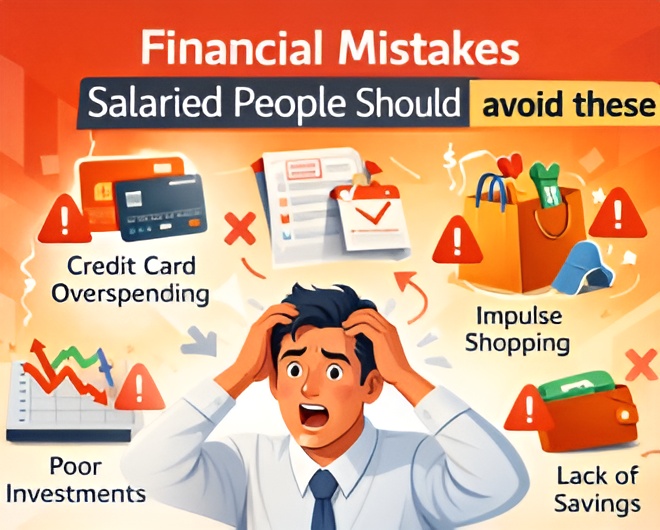
5 Common Financial Mistakes Salaried People Should Avoid For most salaried employees in India, the monthly “Salary Credited” notification is a moment of brief joy. However, for many, that joy is quickly replaced by the stress of EMIs, utility bills, and the dreaded “month-end crunch.” But why does this cycle persist even as your income grows? The problem usually isn’t the size of your paycheck; it is the hidden leaks in your financial bucket. A recent study by Finology paints a worrying picture: one in four salaried individuals cannot survive even a single month if they lose their job. We are earning more, but we are living more dangerously. To turn your paycheck into a path toward freedom, you must avoid these five common financial pitfalls that trap the modern salaried class. 1. Living Without a Safety Net (The “One Paycheck” Risk) The biggest mistake is Optimism Bias the belief that your monthly salary is a permanent guarantee. This false sense of security leads to a lifestyle where income exactly equals expenditure, leaving zero room for error. According to a survey of over 3 lakh millennials, 75% of Indians do not have an emergency fund. This means the majority of the workforce is operating without a financial shock absorber. A mere 30-day delay in salary could force a significant portion of the salaried class into immediate distress. When you don’t have liquid cash during a crisis, you are forced to raid your future. The study shows that 57% of people would have to sell long-term investments (like breaking FDs or stopping SIPs) just to pay their EMIs if their income stopped. Worse, 15% said they would simply have to skip EMI payments, permanently damaging their credit scores. 2. Funding “Lifestyle” Instead of Assets (The Debt Trap) Our parents mostly borrowed to build assets like constructing a home. Today, the trend has flipped. We are increasingly borrowing to fund a lifestyle we cannot yet afford. Recent data shows that 55% of total household debt in India is now for “non-housing retail loans.” This means borrowed money is being spent on depreciating items like cars, gadgets, and vacations. This “Instant Gratification” culture is fueling a fire: credit card spending has surged 13x over the last 13 years. Using “Buy Now, Pay Later” schemes for luxuries effectively mortgages your future income, forcing you to pay interest on past expenses instead of earning interest on your surplus. 3. The “Mañana” Syndrome: Delaying Retirement Planning “I am too young to think about retirement” is the most expensive sentence in personal finance. The math of compounding is brutal for those who wait. Data shows that 93% of people above age 50 regret delaying their retirement planning. There is also a massive reality gap: while 55% of people expect a monthly pension of over ₹1 Lakh, only 11% are confident their current savings can deliver that. Many rely on corporate gratuity as a safety net, yet 99% of people eventually find that gratuity is woefully insufficient to cover actual retirement needs. 4. Being “Risk Averse” to the Point of Real Loss Salaried people often confuse “safe” investments with “smart” ones. Fear of market volatility leads many to keep their entire corpus in savings accounts or traditional low-yield policies. According to SEBI, 80% of Indian households still prefer this “capital preservation” approach. The problem? “Safe” money is silently losing value to inflation. With edible oil prices up by 17.4% and fruits by 13.8%, money sitting in a savings account at 3% interest is shrinking in purchasing power. By trying to avoid the “risk” of the market, you are guaranteeing the loss of value to inflation. 5. Confusing “Employer Insurance” with “Real Protection” A common blind spot is over-reliance on company benefits. Many believe their Group Health Insurance is sufficient, ignoring that this cover vanishes the day they leave or retire. This creates a dangerous “protection gap.” Currently, 82% of life insurance holders lack adequate coverage to replace their income for their families. Furthermore, 69% lack critical illness cover, meaning a single major diagnosis like cancer or heart disease could wipe out years of savings because a standard corporate policy isn’t designed for such high-cost events. The Solution: Implement the 70-10-10-10 Rule Identifying mistakes is easy; fixing them requires a behavioral guardrail. Instead of eating the “income pie” randomly, slice it the moment your salary hits: 70% for Living Expenses: Covers both Needs (Rent, EMI, Groceries) and Wants (Travel, Dining). If your expenses exceed 70%, you are living beyond your means and must cut lifestyle costs, not savings. 10% for Retirement: This is non-negotiable. Move this to an NPS, PPF, or equity fund immediately. Don’t be part of the 93% who regret waiting. 10% for Emergency & Debt: Use this to build your 6-month buffer or aggressively pay off high-interest credit cards. 10% for Wealth & Growth: Invest this in high-growth assets or upskilling. This is the money that builds your “rich” life, while the other buckets keep you “safe.” Conclusion Wealth isn’t just about how much you earn; it is about how few mistakes you make. If you can plug these five leaks, your financial future will stabilize itself. The market will always fluctuate, but your discipline is the only variable you can truly control. WELFIN INSIGHT “The right insurance amount is not the cheapest or the highest it’s the one that fits your life.” January 16, 2026 5 Common Financial Mistakes Salaried People Should Avoid Read More January 16, 2026 What are the Tax Benefits Associated with Loan against property? Read More January 16, 2026 Guide to Financial Planning for Salaried Employees Read More Confused about money decisions? Get clarity on investments, insurance & goals in one plan. Check Now Not sure if your insurance is enough? 👉 Get a Free Insurance Adequacy Check Get In Touch
